Register Names - Backwards Compatibility
1. Intel’s First Processor - 8008
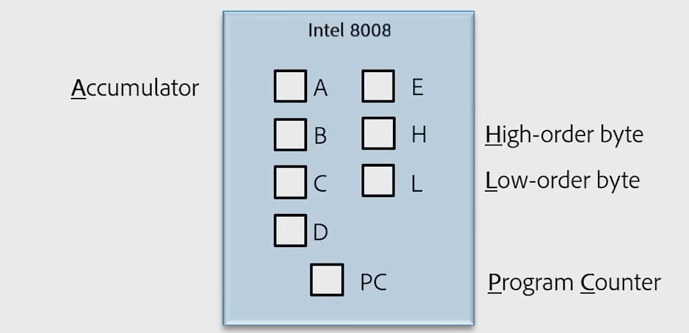
- 8 bit registers
2. Intel’s Base Processor Structure - 8086
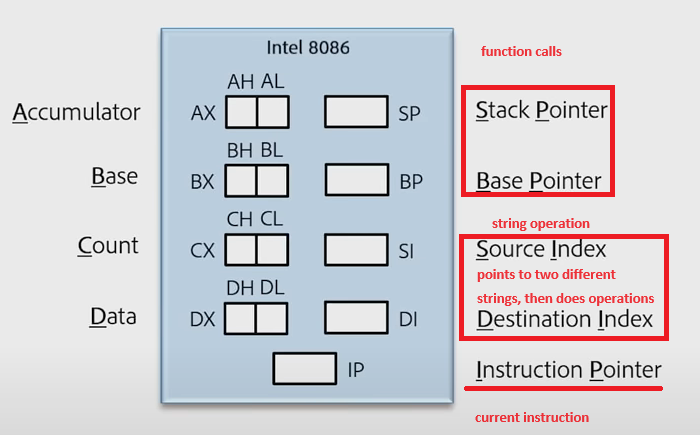
- 16bit registers
- H and L for backward compatibility
Intel 80386
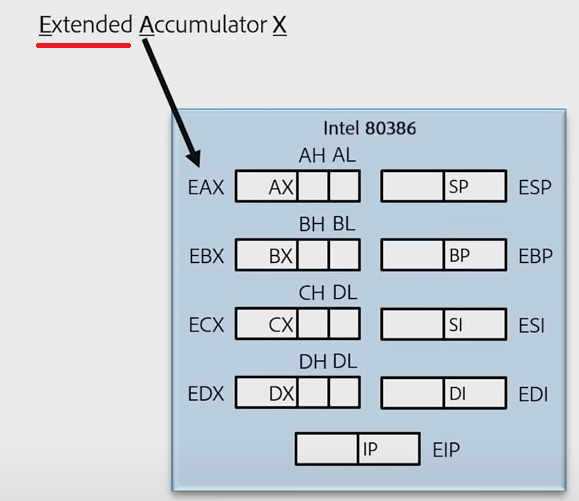
- “Extended” prefix for 32bit
- Can still use 8086 register names for backward compatibility
- After that, naming was being terrible so Intel went to make a whole new Titanium chip - didn’t work well
- AMD takes over
AMD x86-64
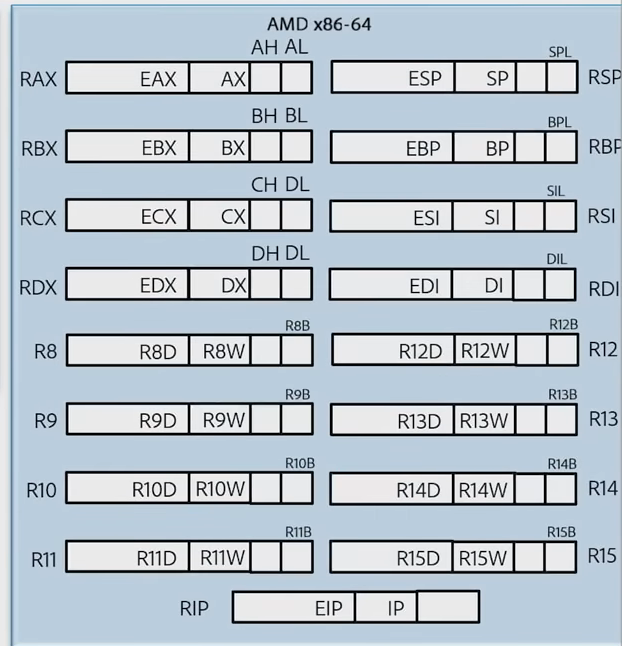
- “Register” prefix
- 9 -> 17 registers
- for the new registers just give a number
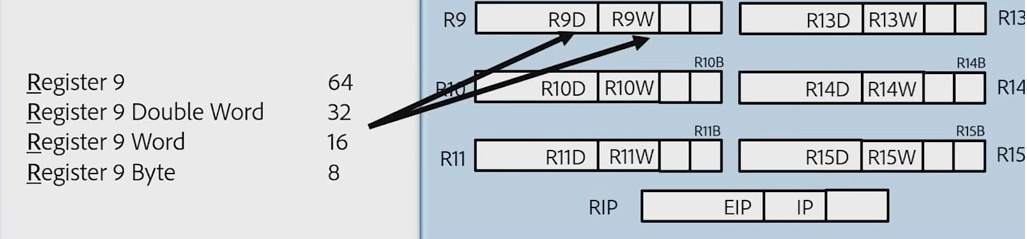
- For backward compatibility with 8086: word is 16 bytes
- x86-64 words are 64 bytes, and we call them quad-words
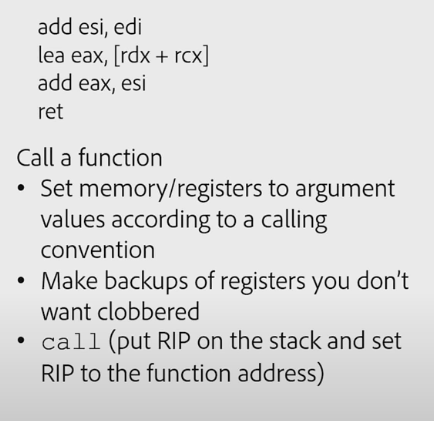
Assembly
- Intel syntax: destination on the left

- adding 32 bits and saving to 64 bit compiler?
-
adding and pointing as if rdx and rcx is a base memory pointer?
- weird in “human conception”
- optimized compiler code is always not pretty, but fast and works
- calling convention for functions - different for every architecture, each register has a unique role